Ken Tyrrell in Formula 1: The Team Owner Who Built a Championship Legacy
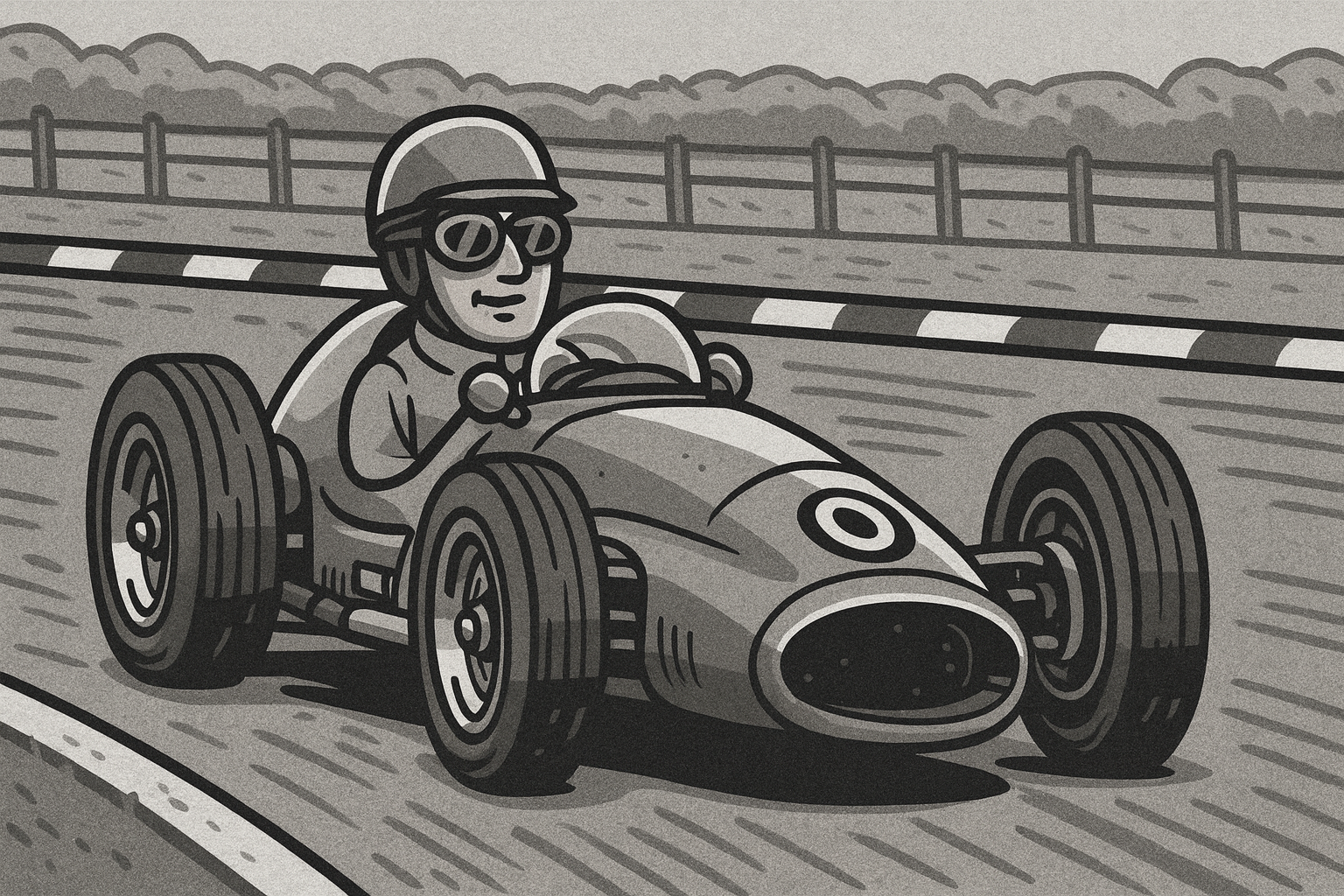
February 11, 2026In the storied history of Formula 1, few figures embody the spirit of independent ingenuity quite like Ken Tyrrell. This unassuming Englishman, with his practical demeanor and sharp business acumen, transformed a modest timber yard operation into a championship-winning force that challenged the sport’s giants. Born on May 3, 1924, in East Horsley, Surrey, Tyrrell’s Ken Tyrrell in Formula 1 saga is a tale of perseverance, talent spotting, and bold innovation. From his early days in lower formulas to securing three Drivers’ Championships and one Constructors’ title, his journey reflects the era when passion and resourcefulness could triumph over vast resources. This account delves into the man who founded the Tyrrell Racing Organisation, blending meticulous management with a knack for engineering breakthroughs, and leaving an indelible mark on grand prix racing.
The Foundations of a Racing Pioneer: Early Life and Entry into Motorsport
Ken Tyrrell’s path to Formula 1 began far from the glamour of the circuits, rooted in the practical world of post-war Britain. After serving in the Royal Air Force during World War II, where he honed skills in logistics and mechanics, Tyrrell returned to civilian life and joined the family timber business, Tyrrell Brothers. The venture thrived amid the reconstruction boom, providing him with the financial stability to pursue a budding interest in motor racing. By 1952, at age 28, he made his competitive debut in a Cooper-Norton for 500cc Formula 3 events, earning the nickname “Chopper” for his lumberyard roots.
Throughout the 1950s, Tyrrell competed in Formula 3 and later Formula 2 with a Cooper-Climax, achieving respectable results including several wins. However, his real talent lay in organization and strategy rather than outright speed. Recognizing this, he retired from driving around 1959 to focus on team management. In 1960, he established the Tyrrell Racing Organisation from a converted woodshed in Ockham, Surrey—a humble setup that would become legendary. Early successes came in Formula Junior and Formula 2, where his prepared cars dominated, often outpacing factory teams through clever modifications and driver coaching.
This period also marked Tyrrell’s emergence as a keen talent scout. In 1964, during a test at Goodwood, he spotted a young Jackie Stewart, whose raw speed and composure impressed him immensely. Signing Stewart for Formula Junior laid the groundwork for one of F1’s most successful partnerships. Tyrrell’s approach—practical, no-nonsense, and focused on results—mirrored the sport’s evolving professionalism in the 1960s, setting the stage for his Formula 1 ambitions. For those delving into Formula 1 history, Tyrrell’s grassroots beginnings highlight how the sport once rewarded ingenuity over opulence.
Stepping into the Premier League: The Matra Partnership and F1 Debut
Tyrrell’s entry into Formula 1 was as calculated as it was ambitious. In 1968, he formed Matra International, a collaboration with the French aerospace firm Matra, utilizing their chassis paired with the potent Ford Cosworth DFV engine—a powerhouse that revolutionized the grid. Sponsored by Elf fuels and Dunlop tires, the team debuted with Stewart at the helm, quickly establishing itself as a contender. That year, they finished second in the Constructors’ Championship, with Stewart securing three wins despite a wrist injury.
The breakthrough came in 1969: Stewart clinched his first World Drivers’ Championship in the Matra MS80, dominating with six victories, while the team placed second in constructors’ standings. Tyrrell’s insistence on switching from Matra’s V12 to the DFV engine proved pivotal, showcasing his engineering foresight. However, tensions arose when Matra demanded use of their French-built engine for 1970. Undeterred, Tyrrell commissioned a secret project: designer Derek Gardner crafted the Tyrrell 001 chassis in a Ferguson factory, debuting it mid-season at the Canadian Grand Prix.
This move signaled Tyrrell’s independence, and the 001’s immediate pole position by Stewart at its first outing validated the risk. For F1 champions enthusiasts, this era underscores Tyrrell’s ability to blend collaboration with self-reliance, turning potential setbacks into triumphs.
Peak Dominance: Championships and the Stewart Era
The early 1970s represented the zenith of Ken Tyrrell’s Formula 1 achievements, fueled by his unbreakable bond with Jackie Stewart. In 1971, aboard the refined Tyrrell 003, Stewart stormed to six wins, securing his second Drivers’ title and delivering Tyrrell its sole Constructors’ Championship. François Cevert, Stewart’s protégé, complemented the lineup with his maiden victory at the US Grand Prix, adding depth to the team’s prowess.
By 1973, Stewart claimed his third and final title with Tyrrell, amassing five wins and 71 points in a season marked by intense competition from Lotus and Emerson Fittipaldi. The team’s total haul included 33 grand prix wins, 23 pole positions, and 77 podiums across their F1 tenure. Tyrrell’s management style—treating drivers like family while demanding excellence—fostered loyalty and performance. However, tragedy overshadowed success: Cevert’s fatal crash during practice at Watkins Glen in 1973 deeply affected the team, prompting Stewart’s retirement at season’s end.
In F1 gossip of the time, Tyrrell’s paternal role earned him the “Uncle Ken” moniker, reflecting his mentorship that extended beyond the track. These years not only cemented Tyrrell as an F1 legend but also highlighted his strategic acumen in an era of rapid technological change. For current parallels, see our F1 standings breakdown.
Engineering Audacity: The Iconic Six-Wheeled P34 and Other Innovations
Tyrrell’s legacy is inseparable from his willingness to innovate, most famously with the Tyrrell P34—the world’s only six-wheeled F1 car. Conceived by Derek Gardner in 1975 and debuted in 1976, the P34 featured four small front wheels to minimize drag and enhance aerodynamics, potentially increasing top speed. Jody Scheckter and Patrick Depailler piloted it to a memorable 1-2 finish at the Swedish Grand Prix, with Scheckter on pole and Depailler second.
Though the car showed promise, tire development issues—Goodyear hesitated amid competition from Michelin—led to its abandonment after 1977. Nevertheless, the P34 remains a symbol of creative engineering in Formula 1 history, influencing later discussions on unconventional designs. Tyrrell’s earlier innovations, like the fan-assisted Brabham BT46 he protested against in 1978, further demonstrated his commitment to fair play and progress.
Other chassis evolutions, such as Harvey Postlethwaite’s high-nose 018 in 1989, kept the team competitive despite budget constraints. For fans of grand prix racing’s technical side, Tyrrell’s experiments underscore how small teams could punch above their weight through bold ideas.
Nurturing Talent: A Roster of Stars and Sustained Competitiveness
Beyond Stewart, Tyrrell’s team served as a launchpad for numerous talents. After Cevert’s death, Jody Scheckter joined in 1974, winning two races before moving to Ferrari. Patrick Depailler followed with the P34’s victory, while Michele Alboreto delivered back-to-back wins in 1982 (Las Vegas) and 1983 (Detroit), the team’s last triumphs. Later drivers included Stefan Bellof, Martin Brundle, Jean Alesi (who podiumed on debut in 1990), and Mika Salo.
Tyrrell’s eye for potential was legendary—Alesi’s recruitment after a standout F3000 performance exemplified this. These drivers contributed to sustained points finishes, even as funding waned. In an era of rising costs, Tyrrell’s ability to extract maximum performance from limited resources kept the team relevant, earning respect across the paddock.
Trials and Tribulations: Scandals and the Turbo Era Struggles
The 1980s brought challenges as turbo engines dominated, but Tyrrell resisted, sticking with the atmospheric Cosworth DFV for reliability and cost reasons—earning the “dinosaur” label from critics. The 1984 season erupted in controversy: Accused of using underweight cars and illegal water tanks for ballast, the team was disqualified from the championship, losing all points and facing a temporary ban. Tyrrell vehemently denied wrongdoing, alleging bias, but the saga drained morale and finances.
Subsequent years saw sporadic successes, like Alboreto’s wins, but declining sponsorship and regulatory shifts eroded competitiveness. By the 1990s, points became rare, with the team’s last in 1997. These hardships tested Tyrrell’s resolve, yet his principled stance against commercialization preserved his reputation as a purist.
The Final Chapter: Sale to BAR and Retirement
Facing escalating costs, Tyrrell sold the team in late 1997 to British American Tobacco and Craig Pollock, who rebranded it as British American Racing (BAR) for 1999. Disagreements over driver choices and team direction marked a bittersweet exit. Tyrrell stepped back before the 1998 season, overseeing the team’s final races, which included Salo’s points at Monaco.
Retiring to Surrey, he served as President of the British Racing Drivers’ Club and remained a respected voice until his death from pancreatic cancer on August 25, 2001, at 77. His funeral drew F1 luminaries, honoring a life dedicated to the sport.
Enduring Influence: Tyrrell’s Place in F1 Folklore
Ken Tyrrell’s Formula 1 legacy endures as a beacon for independent teams, proving that vision and tenacity can yield championships—from a woodshed to 33 grand prix wins and multiple titles. His innovations, like the P34, and talent nurturing shaped the sport, inspiring outfits like Haas today. In F1 news circles, he’s remembered as the “dinosaur” who fought for fairness, his story a reminder of grand prix racing’s golden age of individualism. As the next generation F1 races approaches, Tyrrell’s ethos—that people matter more than machinery—remains timeless.
March F1 Team: The Underdog Legends Who Launched F1 Stars
Niki Lauda: The Rat, the Survivor, and F1’s Enduring Legend
Mario Andretti: The American Who Conquered Formula 1
Cuba Grand Prix: Thrills, Drama, and Revolution in F1 History
Montjuïc: The Scenic F1 Circuit That Ended in Tragedy