Mario Andretti: The American Who Conquered Formula 1
February 12, 2026Mario Andretti stands as one of motorsport’s greatest icons. Born in Montona, Italy, on February 28, 1940, he fled war-torn Europe with his family after World War II. They spent time in a refugee camp before settling in Nazareth, Pennsylvania, in 1955. At just 15, Mario and his twin brother Aldo discovered racing on local dirt tracks. They built their first race car in secret, hiding it from their strict father, Luigi, who disapproved of the dangerous sport. The brothers would sneak out to compete, often faking their ages to enter events. One fateful day, Aldo crashed badly, ending up in a coma. That’s when their dad found out about their racing passion. Instead of banning it, Luigi eventually supported them, though the incident left a lasting mark on the family.
Mario became a naturalized U.S. citizen in 1964. His versatility defined him—he won in open-wheel, stock cars, sports cars, and more. He remains the only driver to claim the Indy 500 (1969), Daytona 500 (1967), and F1 World Championship (1978). Over five decades, he amassed 111 major victories. He earned Driver of the Year in three different decades: 1967, 1978, and 1984. Even today, at 85, his name evokes passion and speed. But beyond the stats, Andretti’s life is packed with hilarious and heartfelt stories that show his down-to-earth side amid the glamour.
Andretti’s story blends immigrant grit with raw talent. He started humbly on dirt ovals. Success came fast in American series. But Europe called. Formula 1 became his ultimate challenge. He bridged American and global racing like no one else. His F1 journey spanned 14 seasons. It included brilliance, heartbreak, and one unforgettable title. Let’s dive into that F1 chapter, his dominant era in IndyCar, and the recent family bid to return to the sport, sprinkling in some of those fun off-track tales along the way.
The Spark: Debut and Early F1 Years (1968–1975)
Mario Andretti’s F1 debut stunned the paddock. In 1968, at the United States Grand Prix in Watkins Glen, he qualified on pole in a Lotus 49. Colin Chapman, Lotus boss, spotted his potential immediately. The Italian-American immigrant led early before mechanical issues dropped him. Still, the message was clear: Andretti belonged here.
Full-time commitment took time. American racing paid well. He balanced USAC IndyCar titles with occasional F1 runs. In 1969, he raced for Lotus sporadically. Results were inconsistent due to clashing schedules. He finished third at the 1969 Indy 500 that year, but F1 remained part-time.
1971 brought a breakthrough. Andretti signed with Ferrari. He won on debut at the South African Grand Prix in Kyalami. It marked the first F1 victory by an American since Phil Hill. He combined it with sports car success, winning at Sebring and Brands Hatch with Jacky Ickx. Ferrari respected his speed. Commitments pulled him back to America often.
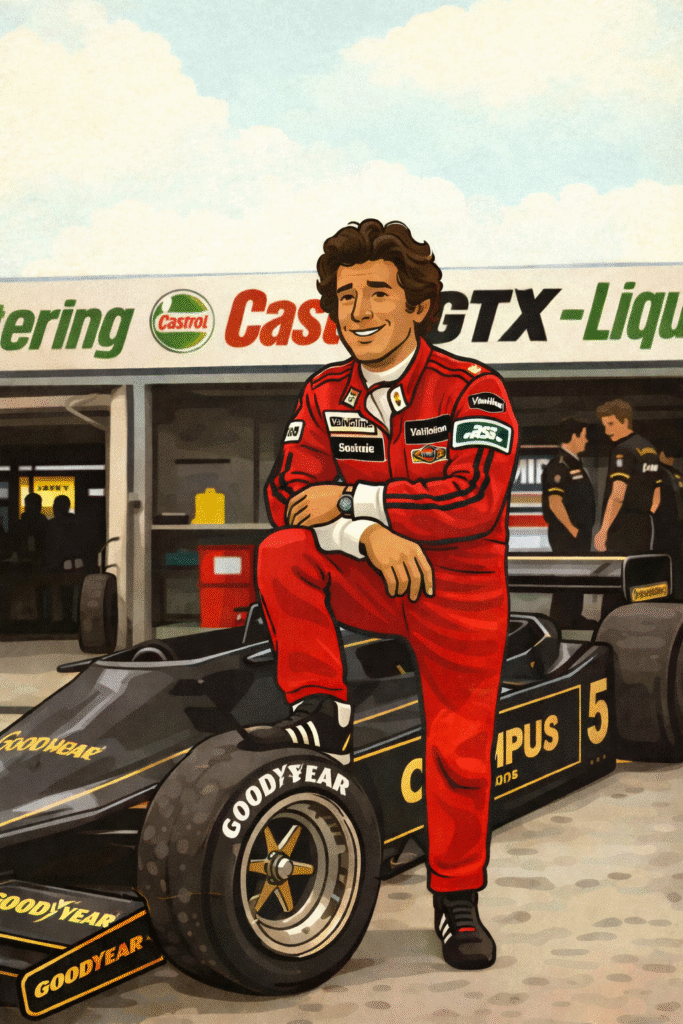
From 1974 to 1975, he drove for Parnelli. The team struggled financially. The car lacked competitiveness. No wins came. Andretti grew frustrated. He needed a stronger package to chase the title.
These early years built his reputation. He showed raw pace. He adapted to different cars quickly. F1 demanded precision on twisty European circuits. Andretti delivered. His aggressive style suited the era’s dangers. He survived crashes that claimed others. By mid-1970s, he was ready for more. Off the track, Andretti’s humor shone through. He once shared a laugh with rivals, but more on those antics later.
The Lotus Era: Rise to Glory (1976–1980)
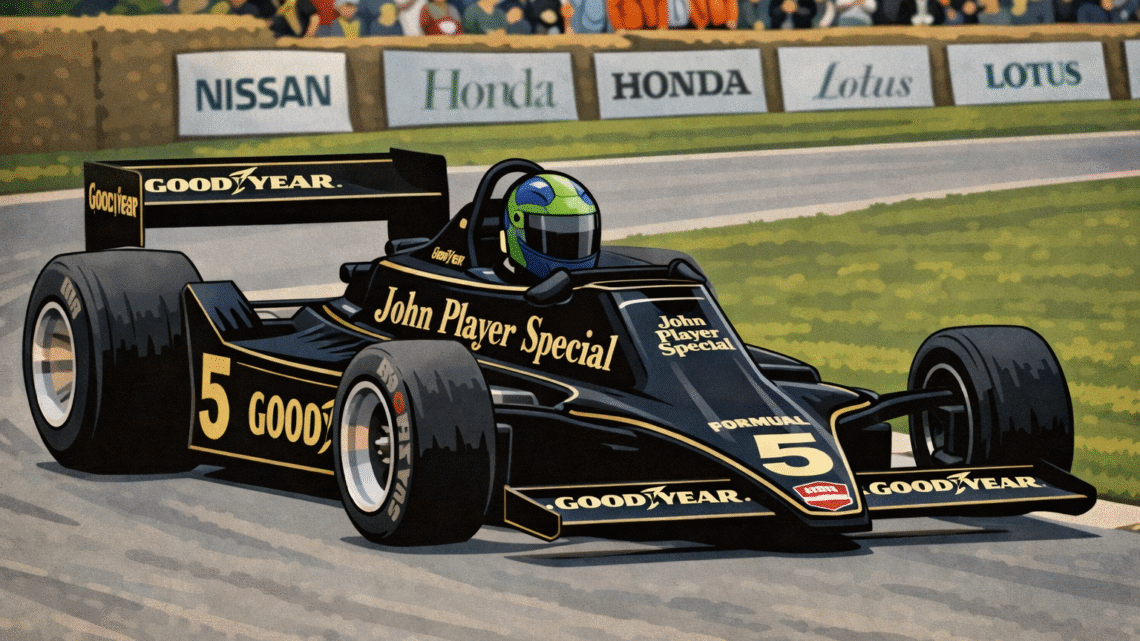
Colin Chapman lured Andretti back to Lotus in 1976. The partnership clicked. Chapman pioneered innovations. Andretti provided feedback and fearless driving.
1976 started strong. He won the season-ending Japanese Grand Prix in pouring rain at Fuji. It marked Lotus’s first win in years. Momentum built.
1977 proved even better. Andretti took four victories: Long Beach (US West), Jarama (Spain), Dijon (France), and Monza (Italy). He finished third in the standings. The Lotus 78 introduced ground-effect aerodynamics. Side skirts sealed the underbody. Downforce soared. The car cornered like never before.
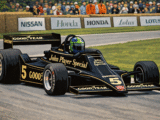
Then came 1978—the pinnacle. The Lotus 79 refined the concept. Andretti dominated. He started on pole eight times. He won six races: Zolder (Belgium), Jarama (Spain), Paul Ricard (France), Hockenheim (Germany), Zandvoort (Holland), and Monza (Italy). Points totaled 64 under the old system. He clinched the Drivers’ Championship.
Tragedy shadowed triumph. At Monza, a first-lap crash injured teammate Ronnie Peterson fatally. Peterson died the next day. Andretti won the race but mourned deeply. “It should have been the happiest day,” he later reflected. The title felt bittersweet. He dedicated it to Ronnie.
1979 saw the Lotus 80 underperform. Ground effects drew scrutiny. Regulations tightened skirts. Andretti won only in Spain. He slipped to lower standings.
1980 brought no victories. Lotus struggled. Andretti left.
His Lotus years defined F1 legacy. He mastered ground effects. He outdrove rivals like Niki Lauda and Jody Scheckter. The 1978 title made him the second American champion after Phil Hill.
But life with Chapman wasn’t all serious. One famous anecdote from this era involves F1 supremo Bernie Ecclestone. At the 1979 Argentine Grand Prix, Chapman offered Andretti $1000 to push Ecclestone into the hotel pool in Buenos Aires. Nervous, Andretti approached Bernie and confessed the plot. Ecclestone, ever the businessman, replied: “Pay me half and you can.” They split the money, and splash—Bernie went in. It’s a classic tale of the era’s playful rivalries.
Another light moment: Andretti once recalled how Donald Trump, at a party, rubbed his head to check if his hair was real. “You tell people my hair is real,” Mario quipped back. Trump admired it, leading to a funny exchange that highlighted Andretti’s enduring charisma.
Later F1 Years and Retirement (1981–1982)
Andretti raced sparingly after Lotus. In 1981, he drove Alfa Romeo occasionally. Results were modest.
1982 offered cameos. He subbed for Williams at Long Beach but retired. Then Ferrari called for Monza. At 42, he took pole in the 126C2 turbo. He finished third. It was his final F1 podium and start.
Career F1 stats impress: 128 starts, 12 wins (9.4% rate), 18 poles, 19 podiums, 10 fastest laps, 180 points. Eight wins came from pole. He raced for Lotus, Ferrari, Parnelli, March, Alfa Romeo, and Williams.
Andretti retired from F1 after 1982. He returned to America. His style—precise, bold—left a mark. He bridged continents. He proved Americans could excel in Europe. Off-track, his adventures continued, like a speeding ticket story from 1977. Riding shotgun with Vince Granatelli, they got pulled over for running a light. The cop recognized Mario and asked for an autograph instead of a ticket. “You’re Mario Andretti!” the officer said. Granatelli joked, “No, I’m Mario Andretti!” The mix-up got them off with a warning.
IndyCar Dominance: A Parallel Legacy
While F1 captured headlines, Andretti ruled IndyCar. He debuted in 1964. By 1965, he won his first title at age 25—the youngest ever. He repeated in 1966 with eight victories.
1969 brought his third championship. He won the Indianapolis 500, leading 116 laps. His average speed set records at 156.867 mph. He also claimed Pikes Peak.
After F1 focus, he returned strong. In 1984, with Newman/Haas, he won his fourth title. He added wins like Michigan 500.
IndyCar totals: 52 wins, 65 poles, 407 starts, four championships. He raced until 1994. His final win came in 1993 at Phoenix—spanning four decades.
Andretti’s Indy success complemented F1. He won everywhere: ovals, road courses, dirt. Versatility set him apart. But Indy had its quirks too. Andretti had a pet pig named Martini who loved grapes. The pig would follow him around the farm, adding a whimsical touch to his life.
In 2003, at 63, he subbed for injured Tony Kanaan in Indy 500 practice. He crashed spectacularly but walked away unharmed. “Another piece of lore,” fans say. It showed his unbreakable spirit.
And don’t forget his banter with AJ Foyt. Andretti once posted a birthday wish for Foyt online. Foyt’s response was hilariously unprintable, but it captured their rivalry-turned-friendship. “What he said I can’t repeat,” Mario laughed.
Visiting the abandoned Nazareth Speedway in 2019, Andretti felt nostalgic pain. “It’s not a happy reunion,” he said, mourning the track his family built and lost to economic shifts.
The Andretti F1 Team Bid: A Family Dream Denied
In recent years, son Michael led Andretti Global’s push for F1 entry. With General Motors (Cadillac), they applied in 2023. FIA approved the bid. But F1’s commercial rights holder rejected it for 2025/2026. They cited lack of immediate value and competitiveness. Concerns included building different cars under new regs. The door opens for 2028 with GM engines.
Mario supported strongly. He felt offended by the decision. “If they want blood, I’m ready,” he said. The bid highlighted family passion. It aimed to bring American flavor back.
A Lasting Legacy
Mario Andretti transcended eras. He won in danger-filled 1960s–80s cars. He adapted to ground effects and turbos. His 1978 title remains America’s last F1 crown. He inspired generations. Drivers like Alexander Rossi cite him.
Today, Andretti’s name endures. His family pushes forward. His story reminds us: passion and talent conquer borders. From Nazareth dirt tracks to Monza podiums, Mario Andretti defined greatness. And through all the wins and wrecks, his humor kept him grounded—like that time he faked his way into races as a kid or shared laughs with icons. He’s not just a racer; he’s a storyteller.
March F1 Team: The Underdog Legends Who Launched F1 Stars
Niki Lauda: The Rat, the Survivor, and F1’s Enduring Legend
Cuba Grand Prix: Thrills, Drama, and Revolution in F1 History
Ken Tyrrell in Formula 1: The Team Owner Who Built a Championship Legacy
Montjuïc: The Scenic F1 Circuit That Ended in Tragedy