Niki Lauda: The Rat, the Survivor, and F1’s Enduring Legend
February 13, 2026Formula 1 has produced countless stars, yet Niki Lauda’s story grips fans with its mix of triumph, tragedy, and sheer determination. Born on February 22, 1949, in Vienna, Austria, this three-time World Champion—claiming titles in 1975, 1977, and 1984—drove for powerhouse teams like Ferrari and McLaren. His horrifying 1976 crash at the Nürburgring tested his limits, but he bounced back in weeks to chase the championship. Nicknamed “The Rat” for his sharp features and cunning mind, Lauda brought a no-frills approach to racing. Beyond the track, he built successful airlines and guided teams like Jaguar and Mercedes to new heights. This exploration uncovers his bold entry into motorsport, iconic races, and off-track ventures that shaped F1 history during its golden days. Buckle up for a journey through Lauda’s world, where strategy met speed in unforgettable ways.
Early Roots and a Bold Gamble into Motorsport
Niki Lauda hailed from a prosperous Austrian family, with his grandfather running a thriving paper mill business. However, young Niki showed no enthusiasm for following that path. Instead, cars captivated him from an early age. At just 19, he secured a bank loan to buy a Mini Cooper and dove into racing, ignoring his parents’ strong objections. They viewed motorsport as too risky and unstable. Undeterred, Lauda competed in hill climbs and local circuits, quickly proving his talent in Formula Vee by 1969, where he notched several wins.
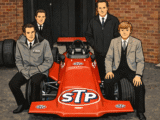
Funds soon became a major hurdle, but Lauda’s resourcefulness shone through. He progressed to Formula Three in 1970 with the McNamara team, yet money shortages threatened his dreams. To keep going, he took out hefty loans, even using his life insurance policy as collateral—a daring move that could have left him in ruin if things went wrong. He once convinced a bank to lend him cash by leveraging distant family connections, despite their disapproval of his career choice. Critics labeled this approach reckless, but Lauda saw it as a calculated gamble, much like the split-second decisions on the track. This mindset of weighing risks and pushing forward defined him. By 1971, his persistence paid off when March Engineering signed him for Formula Two. He delivered strong performances, blending raw speed with tactical smarts. That same year, March gave him his F1 debut at the Austrian Grand Prix, where he finished 11th in an underpowered car. Though the results were modest, Lauda’s feedback to engineers highlighted his analytical edge, setting the stage for bigger opportunities.
Off the track, Lauda kept things simple and focused. He avoided the flashy lifestyles of some peers, opting for economy flights and practical habits. Teammates often ribbed him for his thriftiness, but he brushed it off with a grin. This grounded style contrasted with the glamour of F1’s golden era, yet it fueled his drive to succeed on merit alone.
Streamlining Through March and BRM: Forging a Path to Glory
Lauda’s early F1 years with March in 1972 and 1973 built his reputation, even as the team grappled with financial woes. He scored his first points in 1973 at Belgium with a fourth-place finish, adding more in Monaco and Britain. Though the season yielded just two points overall, his consistent finishes caught eyes. Frustrated by the lack of progress, Lauda switched to BRM in 1974, where the car offered more potential.
That year marked a turning point. Lauda claimed pole in South Africa but retired early. In Spain, he led dominantly from pole to secure his maiden victory at Jarama, holding off challengers with precise control. Another win followed in the Netherlands, where he fended off teammate Clay Regazzoni. Podiums in Monaco, France, and Italy kept him in title contention against Emerson Fittipaldi, though mechanical gremlins dropped him to fourth with 38 points. His meticulous driving and data-driven insights impressed Ferrari, who signed him for 1975 on Regazzoni’s recommendation. Lauda tested the 312B3 extensively, suggesting tweaks that revitalized the team. This move propelled him into the spotlight, blending his early gambles with tangible success.
Ferrari Breakthrough: Claiming the First Title with Precision
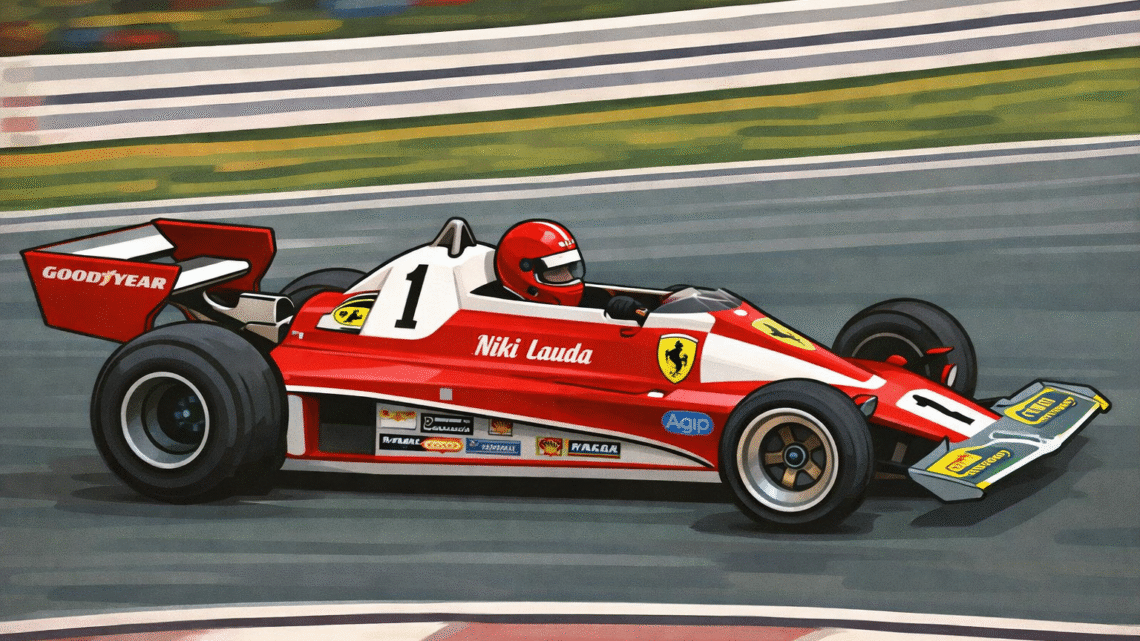
At Ferrari, Lauda found the perfect platform to showcase his talents. The team, hungry for revival under Enzo Ferrari, embraced his ideas. Designer Mauro Forghieri incorporated Lauda’s feedback, transforming the car into a frontrunner. The 1975 season started with a bang as Lauda grabbed poles in the opening races. In Monaco, he cruised to victory from the front, lapping nearly the entire field in a display of dominance. Chaos ensued in Spain with a barrier failure causing multiple crashes, but Lauda navigated it smartly for second place.
Wins piled up in Belgium, Sweden, and France, where his calm handling of pressure stood out. He maintained leads with calculated tire management and strategic pit stops. By the Italian Grand Prix, Lauda sealed the championship early, scoring 64.5 points and ending Ferrari’s drought since 1964. Fans marveled at his consistency, earning him the moniker “The Computer” for his logical approach. He tested relentlessly, once pounding out 100 laps in pouring rain until engineers pleaded for mercy—yet Lauda persisted until every detail satisfied him.
This era also sparked his off-track passions. Lauda launched Lauda Air in 1979, but the seeds were sown earlier with his love for flying. He earned his pilot’s license and often flew himself to races, blending aviation smarts with racing strategy. This venture hinted at the businessman lurking beneath the racer’s helmet, a side that would flourish later.
The 1976 Inferno: A Crash, Heroic Comeback, and Riveting Rivalry
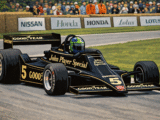
No chapter in Lauda’s life looms larger than 1976, a year of dominance shattered by disaster. He kicked off strongly with Ferrari, winning in Brazil, South Africa, Belgium, Monaco, and Britain. His points lead over James Hunt seemed unassailable. But the Nürburgring, infamous for its dangers, changed everything. Lauda had pushed for a boycott, arguing the track’s layout invited catastrophe. When others voted to race, he lined up anyway.
On lap two of the German Grand Prix, Lauda’s car slammed into a barrier and burst into flames. Trapped inside, he inhaled toxic fumes as fire raged. Fellow drivers like Guy Edwards heroically pulled him free, but severe burns scarred his face and damaged his lungs. In hospital, priests administered last rites, and the world held its breath. Yet Lauda’s fighting spirit prevailed. Doctors noted his remarkable will to recover, defying odds with sheer mental strength.
Astonishingly, just six weeks later, he returned at Monza, bandages still wrapping his head. Qualifying fifth amid excruciating pain, he raced to fourth place, earning roars from the crowd. Hunt capitalized with a win, tightening the battle. Lauda added podiums in Canada and the USA, but the Fuji finale unfolded in monsoon conditions. Prioritizing safety, Lauda withdrew after two laps, handing the title to Hunt by a single point. The rivalry with Hunt was intense yet laced with mutual respect—they visited each other post-crash and forged a lasting friendship.
Lauda’s scars became symbols of resilience. He skipped extensive cosmetic surgery, quipping, “This is who I am now.” His dry wit lightened heavy moments, like joking about his altered appearance in interviews. This chapter not only tested his body but highlighted his strategic mind, turning a near-fatal setback into a legendary comeback story that still inspires F1 fans today.
Second Ferrari Crown and the Shift to Brabham
Rebounding in 1977, Lauda channeled his experience into another title push. Ferrari’s 312T2 chassis played to his strengths, and he started with a win in South Africa after a measured drive. Second in Brazil came despite handling woes, followed by dominance in Long Beach. Victories in Germany and the Netherlands showcased his tactical prowess, holding off faster cars through smart defense. He clinched the championship in the USA with a third-place finish, amassing 72 points amid team tensions—Ferrari even fired him mid-season over contract disputes, yet Lauda delivered unflinchingly.
Seeking fresh challenges, Lauda joined Brabham in 1978 under Bernie Ecclestone. The BT46 car, powered by Alfa Romeo engines, proved unreliable initially. But in Sweden, the innovative “fan car” sucked air for extra grip, delivering a controversial win before rivals protested and the FIA banned it. Lauda added a victory in Italy, finishing fourth overall. 1979 brought frustration with persistent mechanical failures, leading to sparse points. During Canadian practice, Lauda abruptly retired at 30, declaring he’d had enough of “driving in circles.” This pivot allowed him to pour energy into his airline business, marking a seamless transition from racer to entrepreneur.
Married to Marlene Knaus since 1976, Lauda balanced family life with two sons, providing a stable anchor amid his high-stakes world. His retirement felt abrupt, but it opened doors to new adventures, proving his adaptability extended far beyond the circuit.
Expanding Horizons: The Rise and Trials of Lauda Air
Lauda’s aviation passion took flight with Lauda Air, founded in 1979 as a charter service. He started small, flying cargo and passengers with leased aircraft. By the 1980s, it grew into a full airline, operating Boeing jets on international routes. Lauda often piloted flights himself, applying his racing precision to cockpit decisions. He negotiated shrewd deals with Boeing, securing discounts that boosted profitability—skills honed from F1 contract battles.
The airline expanded rapidly, serving Europe and Asia with a focus on quality service. Lauda’s hands-on style shone; he inspected operations personally and prioritized safety. Tragedy struck in 1991 when Flight 004 crashed in Thailand, claiming 223 lives. Devastated, Lauda flew to the site immediately, leading the investigation. He pinpointed a faulty thrust reverser on the Boeing 767, battling the manufacturer publicly until they admitted the issue and implemented fixes. This ordeal tested his resolve, much like his 1976 crash, but it reinforced his commitment to accountability.
Undaunted, Lauda rebuilt and sold shares in 2000 for a profit. He later launched Niki airline in 2003, a low-cost carrier that merged with Air Berlin in 2011. Though financial pressures led to its 2017 bankruptcy, Lauda’s ventures employed thousands and innovated budget travel. Anecdotes abound of him charming crews with his humor or troubleshooting mid-flight. Aviation became his second legacy, blending thrill with business acumen in ways that echoed his F1 golden days.
McLaren Comeback: Securing the Third Title Against the Odds
Boredom drew Lauda back to F1 in 1982, enticed by Ron Dennis at McLaren. The carbon-fiber MP4/1B suited his style, yielding wins in Long Beach and Britain for a fifth-place finish. 1983 introduced turbo engines from Porsche, and though winless, Lauda adapted quickly, learning from teammate Alain Prost’s speed.
The 1984 intra-team duel with Prost became epic. Lauda triumphed in South Africa, France, Britain, Austria, and Italy, relying on consistency over Prost’s higher win count. He edged the title by half a point—72 to 71.5—becoming the oldest champion at 35. Retiring definitively in 1985 after a final win in the Netherlands, Lauda left with 25 victories, 24 poles, and 171 points across 171 starts. His comebacks underscored a career of calculated risks, entertaining fans with battles that defined F1’s competitive spirit.
Post-racing, Lauda consulted for Ferrari in the 1990s, aiding Michael Schumacher’s dominance with strategic advice. His insights helped refine cars and tactics, quietly influencing another golden era.
Leadership Roles: Clashes at Jaguar and Triumphs at Mercedes
In 2001, Ford tapped Lauda as Jaguar’s team principal to revive the struggling outfit. He inherited a team plagued by poor results and internal politics. Lauda pushed for engineering changes and better drivers like Eddie Irvine, but clashes erupted over corporate culture. Executives insisted on formal attire like suits and ties for meetings, but Lauda showed up in jeans and casual shirts, arguing, “I dress for the job, not the image.” This rebellion highlighted his practical ethos, yet it fueled tensions. Performance remained lackluster, with the car often mid-pack due to reliability issues and underfunding. Frustrated, Lauda criticized bureaucratic red tape publicly, leading to his dismissal in 2002 after just 18 months. He later reflected on it as a mismatch between his direct style and corporate rigidity, but the experience sharpened his management skills.
A decade later, Mercedes appointed Lauda non-executive chairman in 2012, a role where his influence soared. He became the architect of their hybrid-era dominance, starting with recruiting Lewis Hamilton in 2013. Over candid dinners, Lauda sold Hamilton on Mercedes’ potential, promising resources and vision despite the team’s then-modest standing. Hamilton credits Lauda’s persistence for his switch from McLaren, a move that yielded multiple titles. Lauda attended every race, offering blunt advice and mediating disputes. His strategic input helped build a powerhouse, with Mercedes winning eight consecutive constructors’ championships from 2014 to 2021.
Lauda mentored drivers like Hamilton, dishing out tough love with humor—once telling him to “stop whining and drive.” His presence fostered a winning culture, blending old-school grit with modern tech. Even after a 2018 lung transplant, Lauda returned to the paddock, embodying resilience until his passing.
Personal Struggles and an Unfiltered Charm
Lauda’s life wove triumphs with personal challenges. He divorced Marlene in 1991 after 15 years, later marrying Birgit Wetzinger in 2008—she donated a kidney to him in 2005 amid his health battles. They welcomed twins, adding joy to his later years. Health woes included kidney transplants in 1997 and 2005, plus the 2018 lung procedure following a summer illness.
Embracing “The Rat” nickname from his buck teeth, Lauda’s candor endeared him to fans. As a BBC commentator, he delivered unfiltered gems, like calling a driver “too slow” mid-broadcast. He authored books such as “My Years with Ferrari,” sharing raw insights that entertained and educated. Conspiracy theories about faking his death swirled briefly, but they held no water.
Lauda passed on May 20, 2019, at 70, surrounded by family. Tributes poured in, with “Rush” (2013) immortalizing his rivalry with Hunt—Daniel Brühl nailed his essence.
Legacy: The Strategic Mind That Redefined F1
Niki Lauda’s imprint on F1 endures through safer tracks post his crash advocacy and adaptable racing across eras. His managerial roles at Jaguar and Mercedes showed how his golden days wisdom translated to team building, especially in luring Hamilton and fueling dominance.
Though critics noted his lack of flashy style, Lauda prioritized results, amassing a legacy of resilience and smarts. Stories like defying Jaguar’s dress code or probing his airline crash bring smiles, reminding us of his human side. In F1 history, Lauda stands as the thinker who conquered chaos, inspiring generations to gamble wisely and persevere.
March F1 Team: The Underdog Legends Who Launched F1 Stars
Mario Andretti: The American Who Conquered Formula 1
Cuba Grand Prix: Thrills, Drama, and Revolution in F1 History
Ken Tyrrell in Formula 1: The Team Owner Who Built a Championship Legacy
Montjuïc: The Scenic F1 Circuit That Ended in Tragedy
Jean-Pierre Van Rossem: The Fraudster Who Brought Ponzi Schemes to F1
- March F1 Team: The Underdog Legends Who Launched F1 Stars
- Niki Lauda: The Rat, the Survivor, and F1’s Enduring Legend
- Mario Andretti: The American Who Conquered Formula 1
- Cuba Grand Prix: Thrills, Drama, and Revolution in F1 History
- Ken Tyrrell in Formula 1: The Team Owner Who Built a Championship Legacy